
You are not lazy. Your calendar just changed shape. The week of Thanksgiving arrives, the routine you had planned gets squeezed between travel, family visits, parties, kids home from school, and year-end deadlines. Workouts become errands, and “I’ll restart in January” starts to sound like a plan.
It’s a familiar pattern. The answer isn’t to force a perfect routine into an imperfect month. It’s to make your plan small and flexible enough to work with the schedule you actually have. This six-week approach assumes your routine has already been disrupted. You’ll rebuild it with short, realistic sessions, and make the plan lighter as the busiest weeks arrive.
Start with the minimum you can repeat
A 15-minute session you actually do beats a 60-minute plan you skip twice. That’s the minimum-effective-dose mindset: not doing as little as possible forever, but choosing a useful, manageable amount that helps you keep showing up.
Did You Know? The World Health Organization’s guidance for adults recommends 150 to 300 minutes of moderate-intensity aerobic activity per week, plus muscle-strengthening activity on two or more days. That’s a helpful general health target, not a reason to treat a holiday week with fewer workouts as a failure. Start where you are and build a routine you can return to.
For beginners, the American College of Sports Medicine (ACSM) recommends resistance training two to three days a week using total-body sessions. During this plan, some weeks will be below that range. That’s intentional: the goal is to protect your habit when life is crowded, then re-establish a steady rhythm.
| Week | Focus | A realistic session target |
|---|---|---|
| 1: The sideline reset | Start from your actual schedule, not your old one. | Two 20-minute total-body strength sessions, whenever they fit. |
| 2: Protect the routine | Keep the two sessions and add a small movement break. | Two 20-minute strength sessions, plus one short walk or mobility block. |
| 3: Party week | Use the minimum effective dose when plans take over. | One 15-minute session is your minimum; do a second if it fits. |
| 4: Travel week | Make your surroundings the workout space. | One 15-minute bodyweight session in a hotel room or living room. |
| 5: The holiday dead zone | Keep the habit alive without demanding a full workout. | One 10-minute movement session; add easy walks when convenient. |
| 6: Restart week | Return to a familiar rhythm and make a simple January plan. | Two 15–20-minute strength sessions and a few minutes to plan ahead. |
Use the schedule as a guide, not a test. If your travel week lands earlier or later, swap the weeks around. If a session gets bumped, don’t try to “make up” every missed minute. Just pick the next realistic opening.
Your week-by-week plan
Week 1: The sideline reset
If your usual routine has already fallen apart, don’t begin by demanding that it come back at full strength. Find two 20-minute openings: before the house wakes up, between calls, or after the kids are settled. A total-body session might include a squat or sit-to-stand, a hip hinge, a push, a pull, and a core exercise. Choose versions that feel appropriate for your experience and space.
No weights? Bodyweight movements work. No uninterrupted half hour? Break your time into smaller blocks if that’s what your day allows. The win this week is completing two sessions, not proving how much you can do.
Week 2: Protect the routine
Repeat the two strength sessions. Add one short walk or a mobility block: something easy to fit into an existing gap. Could you walk while taking a phone call, or stretch for a few minutes after sitting at your desk?
Did You Know? A prospective study by Yanovski and colleagues, published in the New England Journal of Medicine in 2000, found participants gained an average of about 0.37 kg, roughly 0.8 lb, between mid-November and mid-January. The gain tended to persist rather than simply disappear in the new year. That’s not a reason to worry about every meal. It’s a useful reminder that steady habits can matter more than a dramatic January reset.
Week 3: Party week
Your schedule may have more dinners, school events, and end-of-year work than open evenings. So lower the bar before you need to: one 15-minute strength session counts. If you can fit a second, great. If you can’t, you still kept the thread of your routine.
Try a few rounds of movements you know and can do safely: chair squats, wall or counter push-ups, glute bridges, and bird dogs. Keep the pace comfortable and focus on controlled movement. Think about it: would you rather have one short session in the week you have, or keep waiting for a perfect hour that never arrives?
Week 4: Travel week
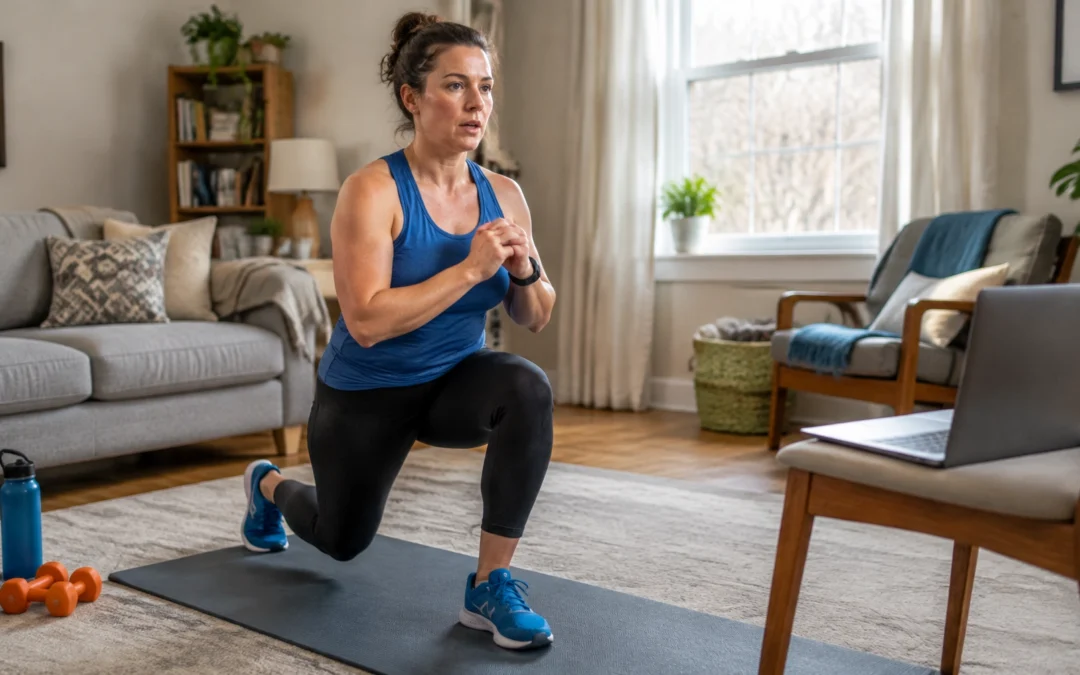
A hotel room, a relative’s living room, or a small patch of floor can be enough. Your 15-minute bodyweight session might include squats, incline push-ups against a sturdy surface, reverse lunges or step-backs, and a simple core exercise. Adapt the movements to your comfort and ability; skip anything that causes pain.

You don’t need to bring equipment or find a gym. A 2021 systematic review on seasonal patterns in BMC Public Health found that physical activity tends to dip in winter while sedentary time rises, and a separate 2021 review in the International Journal of Environmental Research and Public Health reached the same conclusion: activity peaks in spring and summer and bottoms out in winter. A short indoor session is one practical way to stay active when weather, travel, or a full calendar makes your usual routine harder.
Week 5: The holiday dead zone
This is the week when ordinary routines can feel especially far away. Keep the goal small: 10 minutes of movement. You could walk, do a few familiar bodyweight exercises, or take a mobility break between family plans. You don’t need to turn the holiday into a fitness challenge. You’re simply reminding yourself that movement still belongs in your life.
Week 6: Restart week
As January begins, make two 15–20-minute strength appointments with yourself. Keep them simple and use movements you already know. Then write down when you’ll train the following week and what might get in the way. A useful plan includes a backup: if the early workout is missed, when’s your next opening?
If you’re new to resistance training or ready to progress, avoid rushing to heavier weights. ACSM guidance says to increase the load by roughly 2 to 10 percent once you can perform one to two reps beyond your target range. A qualified coach can help you decide what’s appropriate for you.
For a practical foundation to build on, read our guide to building strength at home in under 25 minutes a day. The key is a plan that fits your current ability, available space, and schedule, not someone else’s ideal week.
Keep holiday nutrition practical, not perfect
You don’t need to track every bite or turn a family meal into a math problem. For the two or three big meals that matter to you, slow down enough to enjoy what you chose, and include foods that help you feel satisfied. On a chaotic morning, a protein-forward breakfast (such as eggs, Greek yogurt, or another option you enjoy) can be a practical anchor. And one party is not a failed week. Eat, enjoy the gathering, and return to your usual choices at the next meal.

A personalized approach can make it easier to find options that suit your preferences and real life, without restrictive rules. Nutrition coaching can help you build that flexibility.
Let accountability do some of the work
A plan saved on your phone can be easy to postpone. A real appointment with a live coach gives you a time, a person, and a reason to show up, even when the week gets messy. That’s where virtual one on one fitness coaching can make a difference: a virtual fitness coach can adapt the session to your space, energy, and schedule in real time.
With remote personal training, there’s no commute to squeeze in and no need for a fully equipped home gym. A certified trainer can help you choose movements, coach your form, and keep the session manageable. If you’re looking for a home strength training program for busy professionals, or wondering how to stay fit without a gym commute, personalized fitness coaching online can make it easier to turn an open 20 minutes into a real appointment.
The goal isn’t to end the year with a perfect streak. It’s to finish with a little more resilience, energy, and confidence that you can return to movement when life gets busy. Your next milestone can be small: one session booked, one walk taken, one January plan written down.
Try the difference with a complimentary 60-minute first session, up to a $100 value, with no commitment required. Meet a coach, talk through your goals, and find an approach that fits your actual schedule.
Suggested Tags & Categories
- Categories: Strength Training, Home Fitness, Holiday Wellness, Busy Professionals, Nutrition
- Tags: Six-Week Fitness Plan, Holiday Fitness, Minimum Effective Dose, Home Strength Training, Virtual Personal Training, Flexible Fitness, Nutrition Coaching, phyt.live