
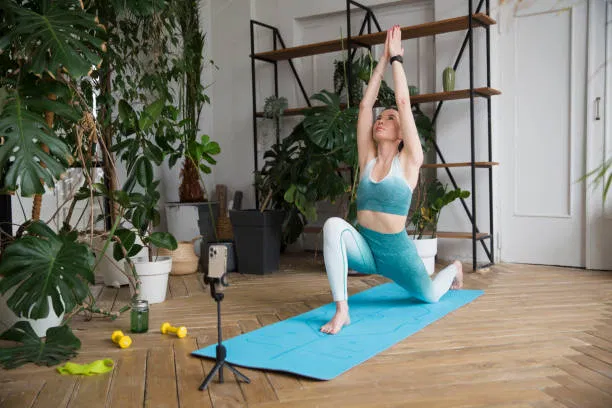
If your fitness routine has stalled because work ran late, family needed you, or you weren’t sure what workout to do, you’re not alone. AI fitness apps make it easier to get started: workouts are on demand, progress is trackable, and the next session is always a tap away.
But what happens when your motivation dips, your schedule changes, or a movement doesn’t feel right? That’s where the difference between an app and a human coach becomes important.
The honest answer isn’t that one option is right for everyone. AI apps can be useful tools, while a virtual fitness coach can help you make better decisions when your individual needs and real life don’t fit a preset plan. For many people, the strongest approach is to use technology for tracking, and a coach for personalized guidance and accountability.
What AI fitness apps do well
AI-powered fitness apps and online workout programs can be a practical, low-cost way to build a routine. They’re available whenever you have time, often include exercise demonstrations, and can make it easy to record workouts, steps, or other progress.
Did you know? A meta-analysis of 28 studies involving 7,454 adults found that smartphone apps and activity trackers were associated with an average increase of about 1,850 steps per day. That’s a useful reminder that tracking and digital prompts can encourage people to move more, but it doesn’t prove that every app works for everyone, or that an app alone guarantees lasting results. Read the research in the British Journal of Sports Medicine.
AI apps can be especially helpful if you:
- Like following a plan independently.
- Want reminders and basic progress tracking.
- Need a little novelty to make exercise feel engaging.
- Prefer on-demand access and low-cost options.
- Already know which exercises feel comfortable and how to perform them safely.
That convenience matters. If you’re an entrepreneur squeezing in movement between calls, a professional with an unpredictable calendar, or a parent working around nap times, an app can help you use a short window when it appears.
But an app’s availability isn’t the same as personalized support. A workout generated from your inputs may not know why your knee feels uncomfortable today, that you slept poorly, or that your “free hour” just disappeared.
Where an app may fall short
Not all apps work the same way. Some use a camera to offer movement cues, and many adjust plans based on your recorded activity. Those features may be useful, but basic feedback is not necessarily the same as an experienced person observing your movement, asking questions, and deciding what to change.
A generic plan can also miss the context behind your week. Maybe you’re returning after a break, managing a previous injury, or simply dealing with more stress than usual. If the program doesn’t adapt well, you’re left to decide whether to push ahead, modify the workout, or stop.
And when motivation drops, who notices? An app can send a notification. It can’t necessarily have a thoughtful conversation about why the plan stopped working, or help you make a realistic adjustment for a chaotic week.
That human connection can matter because fitness isn’t just a set of exercises. It’s a habit built around your energy, confidence, schedule, and goals. Do you need a tougher session today, or a lighter one that helps you stay consistent? A personalized coach can talk that through with you.

Virtual coaching: live guidance that adapts to you
With online personal training, you work with a trainer through live video rather than following only prerecorded content. During virtual one-on-one fitness coaching, a coach can watch your movement, give cues, answer questions, and adjust the session as you go.
A good coach doesn’t just hand you a list of exercises. They learn what you’re working toward, what equipment you have, and what could get in the way. If a busy week throws off your schedule, they can help you find a manageable next step instead of treating one missed workout like a failed plan.
For example, a live coach might swap an exercise if it doesn’t feel right, adjust the session to suit your available time, or help you build a routine that works at home. And with personalized nutrition coaching, you can also get practical support around eating habits that complements your training, without needing to follow a one-size-fits-all menu.
The trade-off is real: live coaching costs more than many apps and requires you to attend a scheduled session. That said, flexible booking can make it easier to fit coaching around a full calendar. At phyt.live, you can browse certified trainers and book ahead or, when availability allows, within the hour. Sessions take place over secure video, so there’s no commute.

AI fitness apps vs. a virtual fitness coach
| What matters to you | AI fitness app | Virtual fitness coach |
|---|---|---|
| Cost and access | Often lower cost and available on demand | Paid live sessions; availability depends on the coach |
| Tracking | Convenient for logging activity and progress | Can discuss your progress and help interpret what to change |
| Workout guidance | Demonstrations, preset plans, and varying levels of automated adjustment | Live coaching can tailor the session to your goals, ability, and feedback |
| Form feedback | Some apps offer camera-based cues, but capabilities vary | A coach can observe your movement and give real-time verbal cues |
| Accountability | Reminders and streaks can help | A real person can check in with you and talk through barriers |
| Changing circumstances | Adaptation depends on the app and what it knows | You can explain what’s changed and work out a suitable adjustment together |
| Best fit | Independent exercisers who enjoy tracking and on-demand sessions | People who want personal direction, live support, and human accountability |
Neither column is a guarantee of results. A skilled coach can help, but progress still depends on whether the plan fits you and whether you can keep returning to it. Likewise, an app can be a valuable tool, but tracking alone won’t make every decision for you.
The practical middle ground: use tech for tracking, a coach for decisions
You don’t have to choose between technology and personal support. In a hybrid approach, an app or wearable helps you keep track of activity, sessions, or habits. A coach helps you interpret that information and decide what to do next.
For instance, your tracker may show that you’ve been less active this week. That’s useful information. A coach can help you consider why (travel, deadlines, low energy, a change in routine) and choose a realistic response. Maybe that means shortening your sessions, shifting your workout times, or easing back in after a break.
This is also a sensible way to use AI: as a support tool, not an authority on every training decision. Research on digital fitness interventions is promising, but study results vary, and there isn’t one app or coaching model that works for everyone. If you have pain, a health condition, or concerns about exercise safety, speak with a qualified healthcare professional about what’s appropriate for you.
The point isn’t to collect more data. It’s to make the data useful, and build a routine that supports your energy, resilience, and focus in everyday life.
Which option is more likely to get you results?
Choose an app if you’re comfortable exercising independently, want an on-demand option, and find tracking motivating. Choose live coaching if you want help adapting workouts to your goals, movement, and schedule, or if accountability from another person would make it easier to stay consistent.
If you’re still not sure, you don’t need to commit to a long plan just to find out. phyt.live offers a complimentary 60-minute first session, up to a $100 value, with no commitment required. You can meet a coach, talk about what you want to achieve, and see what personalized fitness coaching online feels like before deciding whether it suits you. Explore phyt.live and book your first session.
No commute, no expectation that you own a home gym, and no need to overhaul your routine overnight. Start with a conversation, choose one manageable next step, and build from there.
Suggested Tags & Categories
- Categories: Online Personal Training, Online Fitness, Technology, Nutrition
- Tags: AI fitness apps, virtual fitness coach, online personal training, personalized fitness coaching online, online workout programs, virtual one-on-one fitness coaching, personalized nutrition coaching, fitness accountability, home workouts